Python Automation: Complex PDF to Excel Table Replication & Extraction
A Python-based document automation workflow that extracts structured data from PDFs and reproduces complex layouts in clean, usable Excel outputs.
Overview
This project shows how custom Python automation can do more than just dump text from a PDF. It can extract structured information, preserve important layout logic, and generate clean Excel outputs that are usable in downstream workflows.
For businesses dealing with invoices, statements, reports, or form-like PDFs, the real challenge is usually not extraction alone. It is getting data into a format that can be reviewed, reused, and integrated into reporting or operations. This project focuses on that practical outcome.
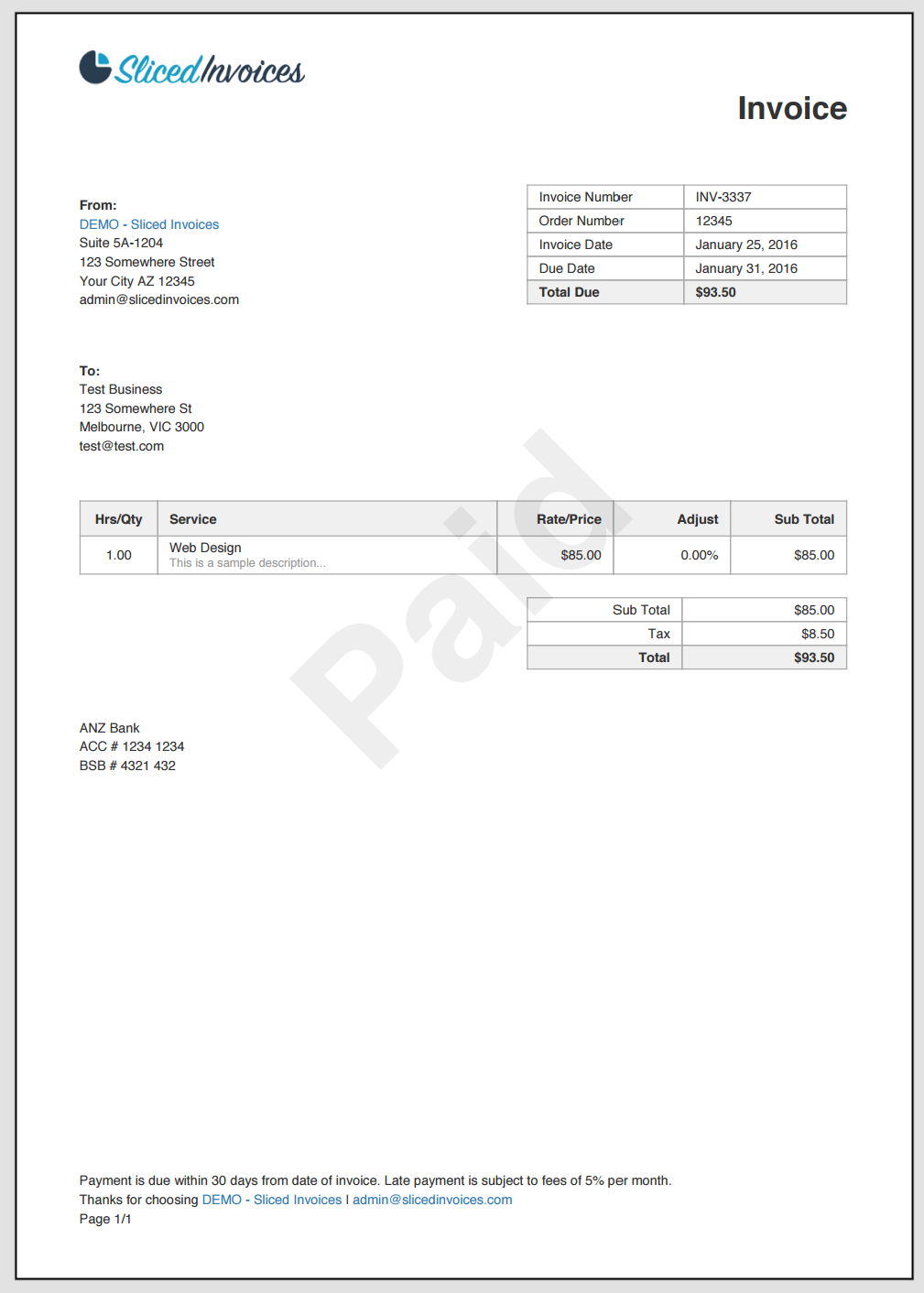
Sample Invoice PDF
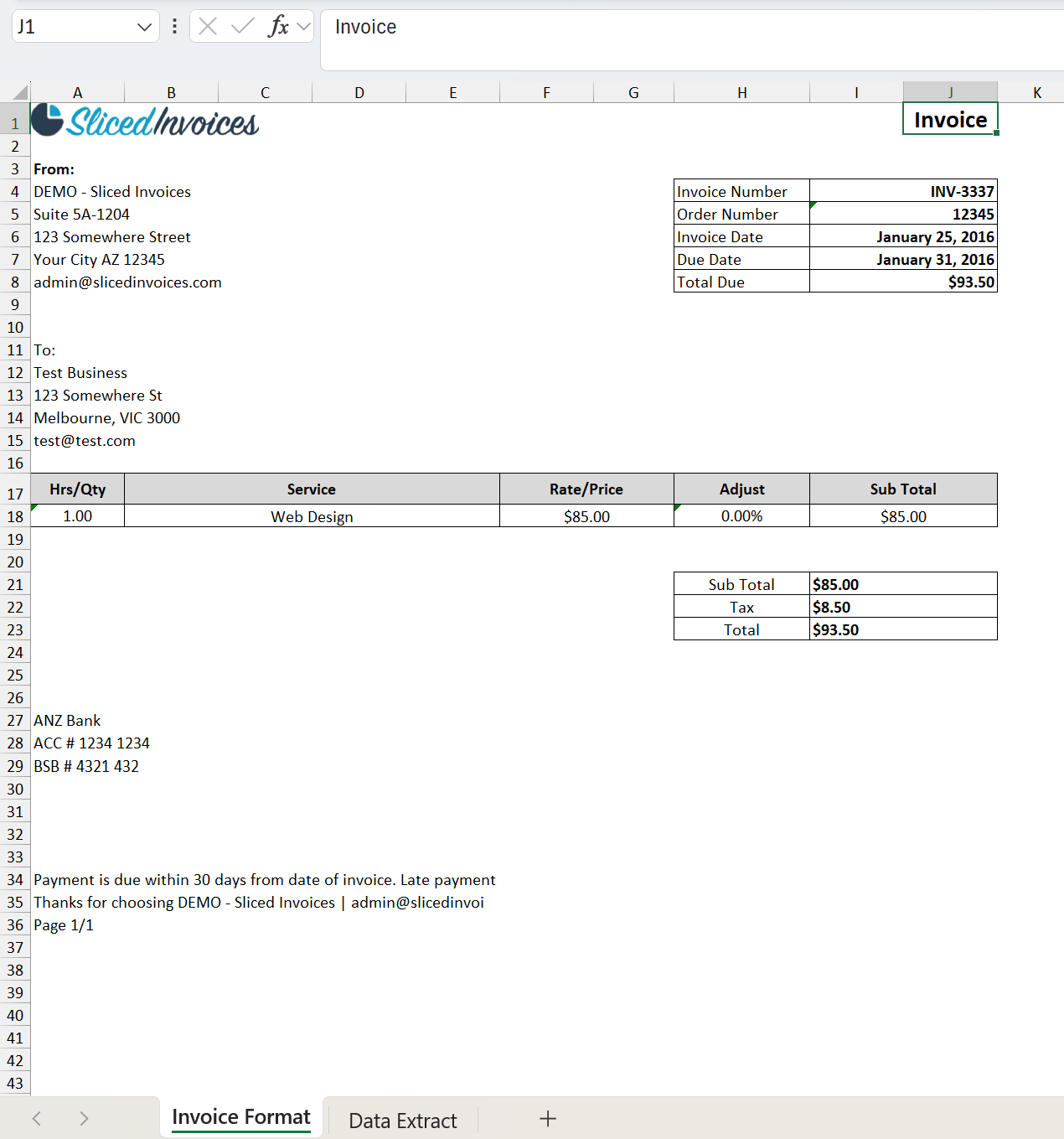
Excel replication output
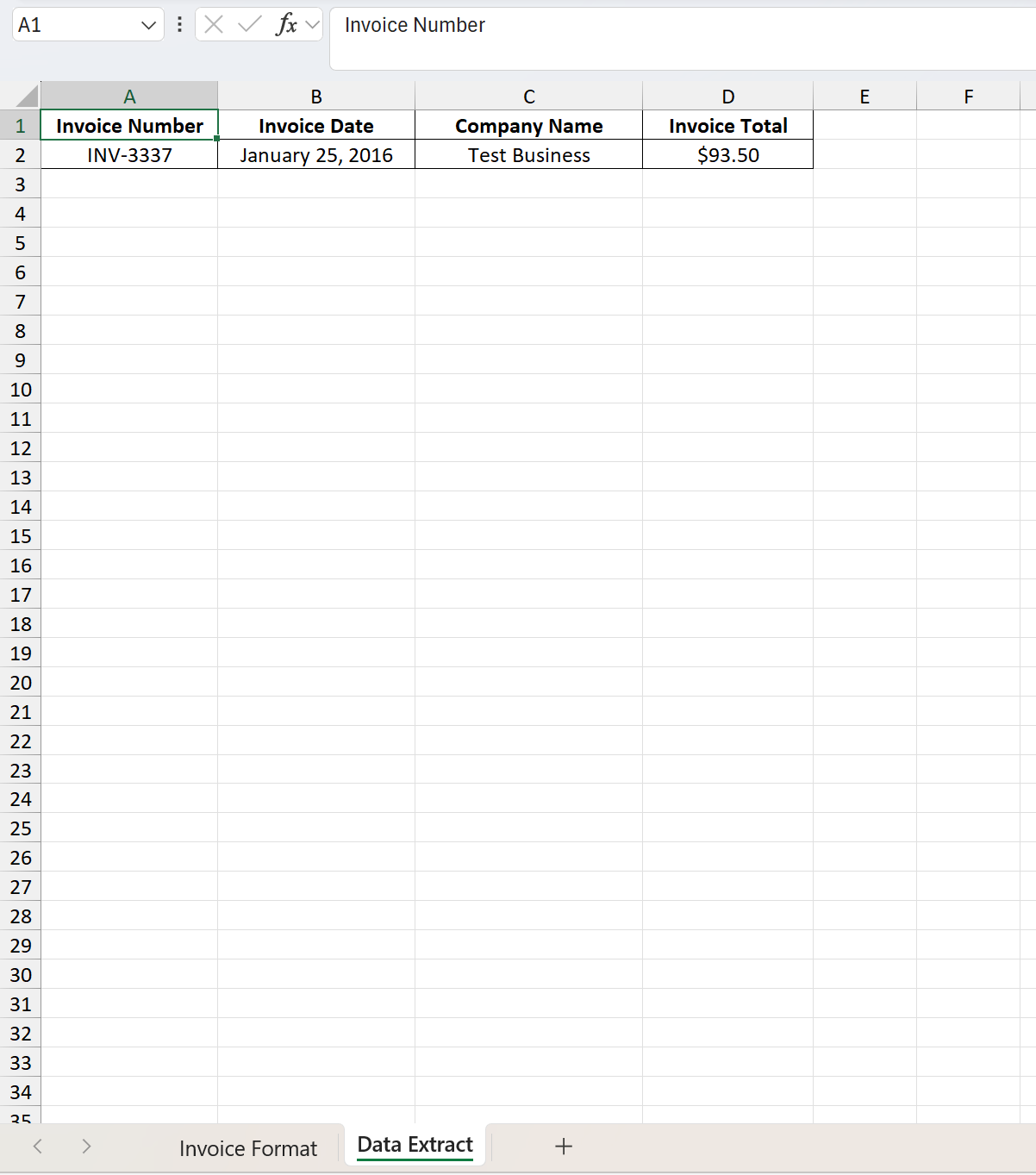
Excel data extraction output
Business value
1. Reduce manual document handling
Instead of reviewing and retyping PDF data manually, the workflow extracts and structures it into Excel automatically.
2. Preserve usable formatting
For many teams, output quality matters. This build focuses on generating clean, organised Excel files rather than low-quality flat dumps.
3. Support summary reporting
The extracted data can feed summary sheets, dashboards, or broader reporting workflows, turning static documents into operational data.
4. Adapt to custom formats
The automation can be tailored around specific document structures, formatting rules, and business logic.
Python Libraries & Tools
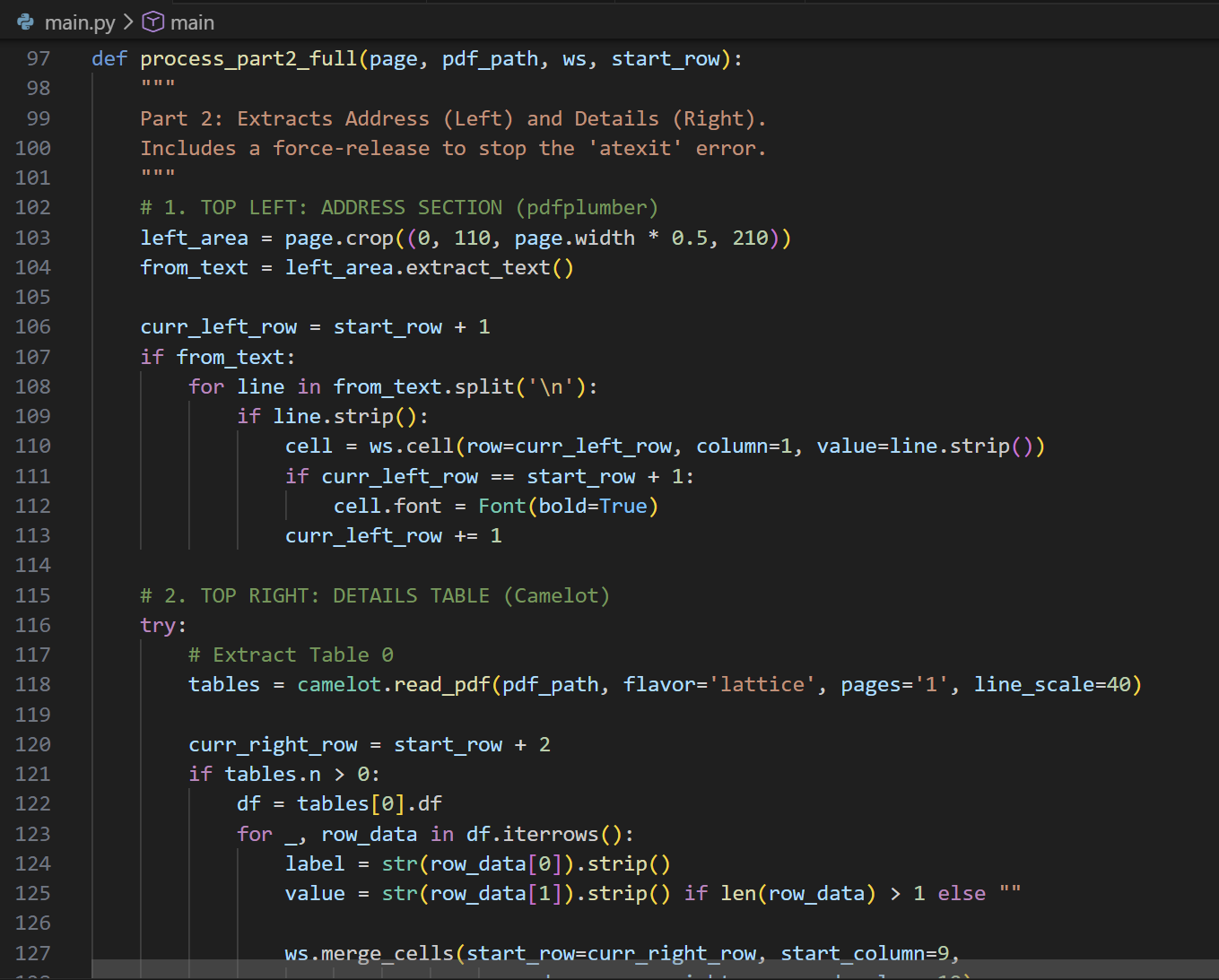
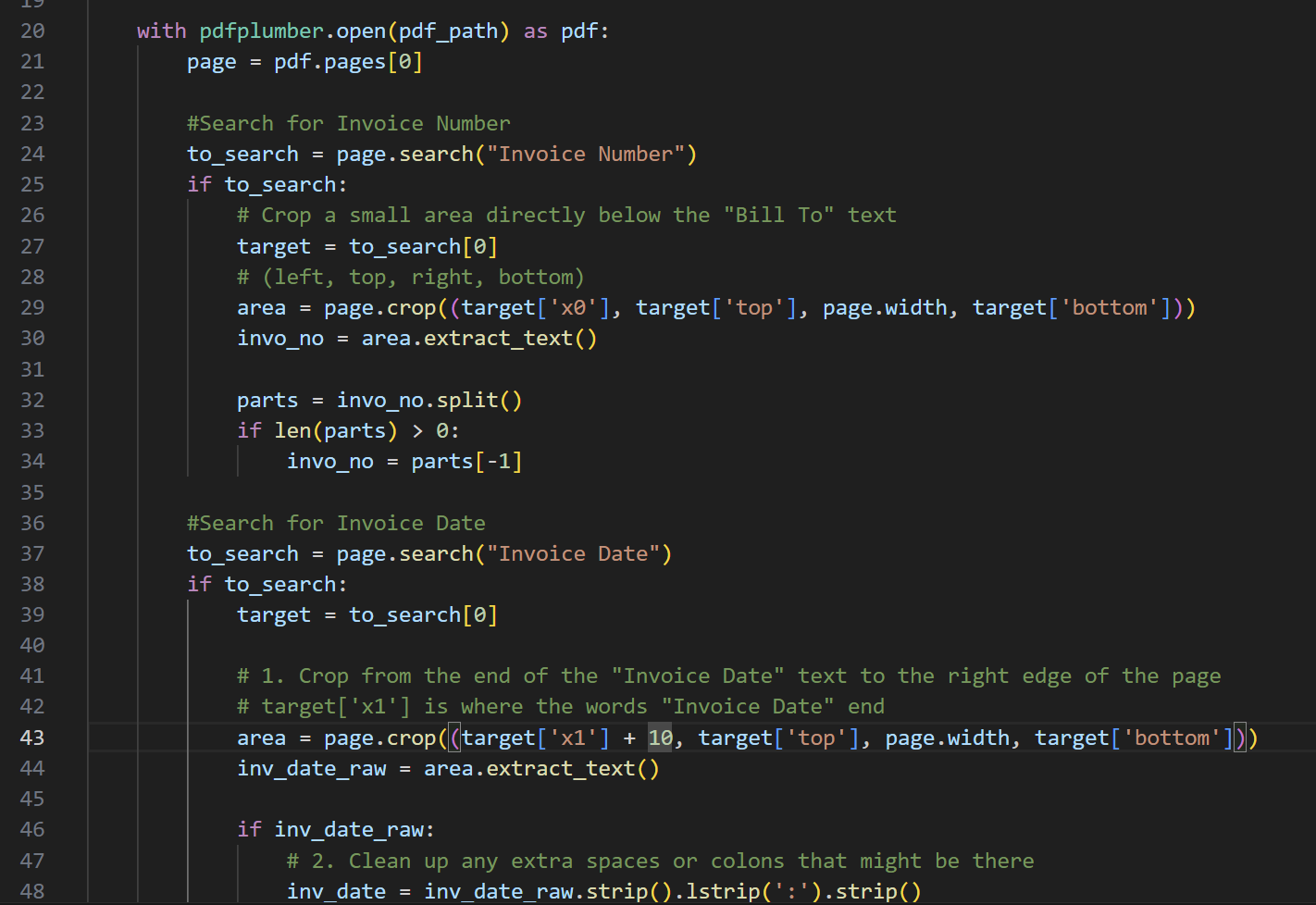
- pdfplumber: for high-precision extraction of metadata, headers, and positioned text
- Camelot: for complex table extraction and multi-line cell handling
- pytesseract (OCR): for scanned/image-based documents
- openpyxl: for building structured, formatted Excel outputs
Use cases
- invoice and statement extraction
- PDF-to-Excel operational workflows
- summary sheet generation from batches of files
- custom document processing logic for finance or operations teams
This kind of workflow is useful for teams that receive recurring PDF-based data and want to move from manual processing toward a cleaner Python-driven automation pipeline.